You cut out soda. Maybe you stopped keeping candy in the house. And then you sat down at your last checkup and found out you have another cavity. That’s demoralizing, and it’s also really common. The problem is that the “just avoid sugar” message is incomplete, and most people never get the rest of the explanation. At Kwon Emergency Dentistry in Costa Mesa, Kwon Emergency Dentistry cavity treatment often starts with understanding that cavities are not caused by sugar alone. The foods that linger on your teeth, feed bacteria, or weaken enamel can matter just as much as obvious sweets.
At Kwon Emergency Dentistry in Costa Mesa, CA, this comes up constantly. Patients who are genuinely trying to take care of their teeth, confused about why it isn’t working. Usually, once we talk through what they’re actually eating and drinking throughout the day, the pattern becomes obvious pretty fast.
Why Sugar Gets All the Blame but Is Not the Only Problem
Sugar’s reputation is deserved. When cariogenic bacteria like Streptococcus mutans metabolize fermentable carbohydrates, they produce lactic acid, and that acid is what breaks down enamel over time. Sugar feeds that cycle efficiently, which is why it became the face of the cavity conversation.
But fermentable carbohydrates aren’t just sugar. Refined starches, certain fruits, acidic drinks with zero sugar in them, foods that reduce saliva flow, foods that physically stick to your teeth — all of these drive decay through mechanisms that have nothing to do with how sweet something tastes. Dental caries is classified as a multifactorial disease, meaning it doesn’t have a single cause. It develops when susceptible enamel, cariogenic bacteria, fermentable substrates, and time all line up together. Cutting sugar addresses one of those four factors. The others are still there.
“Sugar is the most well-known culprit, but in my experience, the patients who can’t figure out why they keep getting cavities are usually eating something acidic or sticky every day without realizing what it’s doing.” — Soo Kwon DMD

The Surprising Foods That Feed Cavity Causing Bacteria
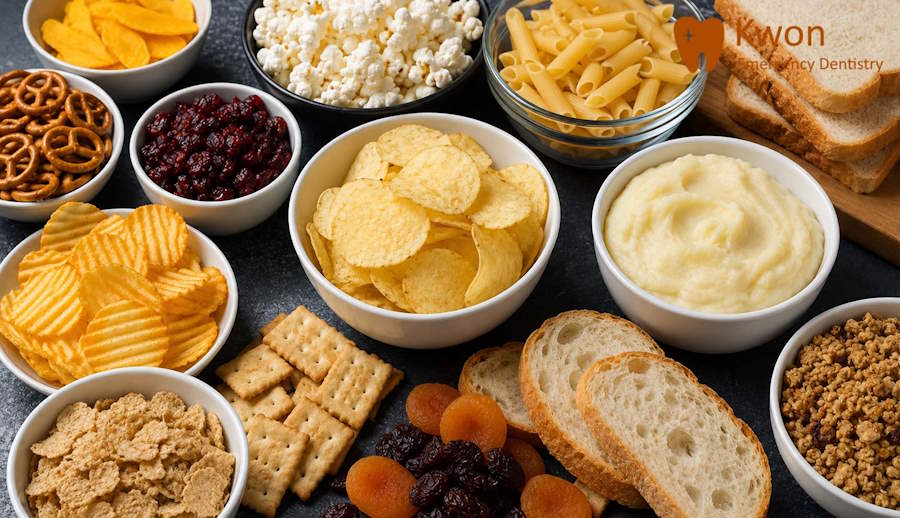
Crackers and white bread are genuinely worse for some people’s teeth than candy is. Salivary amylase starts breaking refined starch into simple sugars almost the moment it enters your mouth, and starchy foods tend to compress into the pits and grooves of your back teeth and stay there. A piece of chocolate dissolves and clears. A cracker can sit packed into a molar fissure for a long time.
Dried fruit is another one. Raisins, dates, dried apricots — concentrated sugar and highly adhesive. They press into surfaces and don’t let go. Fresh fruit isn’t the same because the water content helps clear sugar away. The drying process changes everything about how fruit interacts with your teeth.
Citrus is worth understanding specifically. Lemon juice has a pH around 2.0, and enamel starts to demineralize at approximately pH 5.5. People who drink lemon water throughout the day thinking it’s a healthy habit are keeping their oral pH below that threshold for hours at a stretch. The teeth don’t get a chance to recover.
Sports drinks are probably the most underestimated one. People assume diet or sugar-free versions are fine, but most sports drinks sit between pH 2.9 and 3.7 regardless of sugar content. The acid alone is enough to do real damage, especially when someone sips one slowly over a long workout.
Alcohol dries the mouth out. Saliva is the mouth’s primary defense against acid — it buffers pH and delivers minerals back to enamel through remineralization. Red wine combines tannins, acidity, and alcohol-related dryness all at once. White wine is often actually more erosive because of its lower pH. Neither is a reason to panic, but both become meaningful if someone already has low salivary flow.
How Acidity and Stickiness Matter as Much as Sugar Content
There are two things that don’t get talked about enough: the pH of what you’re eating and drinking, and how long it actually stays in contact with your teeth.
Acidic foods don’t need bacteria to damage enamel. Dental erosion — direct chemical dissolution from dietary acids — is a separate process from bacterial caries, but the two compound each other. Enamel that’s already been softened by acid exposure demineralizes faster when bacteria start producing their own acid on top of it.
| Food or Drink | Approximate pH | Main Risk Factor |
|---|---|---|
| Lemon juice | 2.0 | Direct enamel erosion |
| Cola (including diet) | 2.5 | High acidity regardless of sugar |
| Orange juice | 3.5 | Acidity combined with fermentable sugars |
| Sports drinks | 2.9 to 3.7 | Acidity often underestimated |
| Dried fruit | 3.5 to 4.5 | Acidity plus strong adhesion to enamel |
| White bread or crackers | Near neutral | Starch fermentation, high contact time |
Frequent snacking without rinsing can also lead to lingering tooth pain over time.
Contact time is one of the most significant variables in cavity development. A food that clears from your mouth in seconds is far less damaging than something that clings to enamel for an extended period. Frequency matters just as much as amount. Sipping a sports drink slowly over two hours creates far more acid exposure than drinking the same volume in ten minutes, because the mouth never gets the chance to buffer and recover in between.
Building a Diet That Protects Your Teeth Without Giving Up Everything You Love
Nobody needs to stop eating citrus or dried fruit. That’s not a realistic or necessary conclusion. What actually moves the needle is adjusting timing and habits in ways that give your mouth a chance to recover.
Eating acidic or sticky foods as part of a meal rather than as a standalone snack makes a real difference. Saliva production is higher during meals, which helps neutralize acid and clear debris. A handful of raisins at lunch is a very different oral event than the same handful eaten slowly at your desk over an hour.
Rinsing with plain water after something acidic is simple and genuinely helpful. Don’t brush right away though — enamel that’s been softened by acid is more vulnerable to abrasion, so waiting 30 to 60 minutes before brushing gives it time to reharden.
Xylitol-containing sugar-free gum after meals does two things worth knowing about. It stimulates salivary flow, which speeds up pH recovery, and research has shown it reduces Streptococcus mutans counts in the oral environment. It’s not a magic fix but it’s an easy habit with solid evidence behind it.
Hydration matters more than most people realize. Dry mouth — whether from medication, mouth breathing, or just not drinking enough water — dramatically increases caries risk by removing the buffering capacity that saliva provides. Some common medications, including antihistamines and antidepressants, list dry mouth as a side effect. If that applies to you, it’s worth mentioning to your dentist because there are things that can help. Snacking on hard or sticky foods is also a common way people end up with lost filling risk they didn’t expect.
Fluoride is still the most evidence-supported remineralization tool available. A standard fluoride toothpaste used consistently gives enamel a better shot at recovering from daily acid exposure. If you have a history of frequent cavities despite good habits, prescription-strength fluoride is worth asking about.
Patient Feedback
“So far, I’ve received great dental treatment here. The people are really kind, understanding, and efficient, and explain everything clearly. Kwon Emergency Dentistry has been really accommodating even during urgent situations, and the pricing is affordable. I suggest them to anyone requiring remarkable oral treatment.”
— Hubert Mitchell
“I was fortunate that this practice was able to accommodate me for the very last appointment. A delightful lady at the front desk greeted me warmly with her wonderful personality. Dr. Kwon made herself available for my appointment. She exhibited a high level of professionalism and was very direct. Thanks so much to the whole dental staff.”
— Hendrix Simpson
Cavities Don’t Mean You Failed
They mean a set of factors lined up in a way that wasn’t working for your teeth, and a lot of those factors were probably never explained to you. Once the full picture is clear — acidity, contact time, salivary flow, frequency of exposure, not just sugar — the pattern usually makes sense pretty quickly.
If recurring decay has been a frustrating pattern for you, Kwon Emergency Dentistry sees patients from across the area including Halecrest, Mesa Verde, and Fountain Valley. A conversation about what your diet actually looks like day-to-day is a normal part of a visit here. Call (949) 990-6505 whenever you’re ready.
Safe Relief Options From Tooth Infection Recommended by Our Dental Clinic Team