
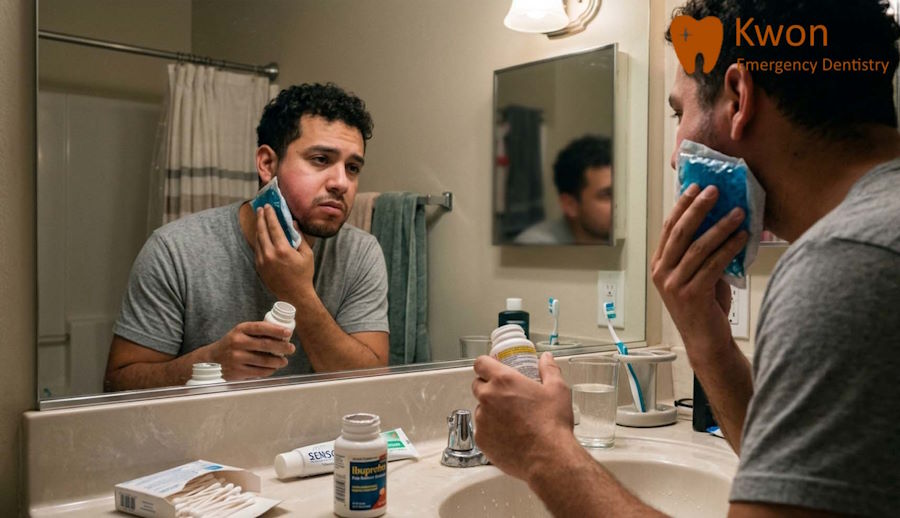
Tooth infection pain has a way of taking over everything.
It’s not the kind of pain you can casually ignore while going about your day. It throbs. It spreads. It wakes you up in the middle of the night and somehow feels worse every hour. By the time most people start searching for relief, they’ve already tried painkillers, ice packs, mouthwash, and probably a dozen random home remedies they found online. At Kwon Emergency Dentistry in Costa Mesa, we outline common signs you may have an infected tooth so you can seek prompt care before the problem worsens. Early recognition and timely treatment protect your health and reduce the chance of complications.
Sometimes nothing seems to touch it for long.
At Kwon Emergency Dentistry in Costa Mesa, emergency tooth infections are one of the most common after-hours calls we get. Not because people neglect their teeth, but because infections can escalate quickly and the pain becomes difficult to manage at home. If you’re dealing with that right now, here’s what actually helps while you wait to be treated.

Why Tooth Infection Pain Feels So Intense
A regular toothache usually comes and goes. Maybe cold drinks trigger it. Maybe biting down causes a sharp jolt. Then it settles for a while.
Infection pain is different.
Once bacteria spreads into the inner part of the tooth or surrounding tissue, pressure starts building inside an area that has almost no room to expand. That pressure keeps increasing, which is why infected teeth often feel like they’re pulsing or throbbing nonstop.
In many cases, the infection has already reached the pulp of the tooth by the time the pain becomes severe. From there, it can spread into nearby bone and soft tissue, which is why the pain often feels deep and hard to pinpoint.
According to the Journal of Endodontics, dental infections lead to well over a million emergency room visits every year in the United States alone.
And honestly, most people who go to the ER for dental pain are not overreacting. Tooth infection pain can become unbearable surprisingly fast.
The Best Over-the-Counter Pain Relief Options
When people call a dentist in the middle of the night, the first question is usually simple: “What can I take right now?”
Ibuprofen Usually Works Best
Ibuprofen is typically the first recommendation because it helps reduce both pain and inflammation. That matters because infection pain is heavily tied to swelling and pressure around the nerve. Taking ibuprofen with food can help reduce stomach irritation, especially if you need it consistently over several hours.
Alternating Ibuprofen and Acetaminophen Can Help More
Many dentists recommend alternating ibuprofen with acetaminophen because the two medications work differently in the body. Instead of waiting for pain to become unbearable again, alternating them every few hours can provide steadier relief through the night. For many people, that combination works noticeably better than taking either medication alone.
Benzocaine Gels Only Help a Little
Products like Orajel can numb the surface of the gums temporarily, but they don’t reach the actual infection deep inside the tooth. That means they may dull irritation for a short period, but they usually won’t stop the throbbing pain completely. Still, even 15 or 20 minutes of relief can help if you’re trying to eat or finally get some sleep.
What You Should Avoid Doing
When pain gets bad enough, people start trying anything. Some home remedies make things worse.
Don’t Put Aspirin Directly on the Gum
This is a common mistake. Aspirin placed directly against gum tissue can actually cause a chemical burn, leaving you with irritated tissue on top of the infection you already have.
Don’t Assume It Will “Go Away on Its Own”
An abscess is an infection. It does not simply disappear because the pain temporarily fades. Sometimes the nerve inside the tooth dies, which can make the pain seem less intense for a short time. That doesn’t mean the infection is gone. It may actually be spreading.
In many cases, a root canal option can save the tooth rather than losing it.
Natural Remedies That Can Temporarily Help
There’s no natural cure for a dental infection, but a few things can make the situation more manageable until treatment.
Clove Oil Is One of the Few Remedies Dentists Respect
Clove oil contains eugenol, which has natural numbing and antibacterial properties. Dentists have used versions of it in temporary dental materials for years. A small amount on a cotton swab placed near the painful area can provide short-term relief. Just don’t overdo it. Too much concentrated clove oil can irritate the gums and soft tissue.
Warm Salt Water Rinses Help Calm the Area
Salt water won’t eliminate the infection, but it can help reduce irritation and clean bacteria from the mouth. Use warm water, not hot water, and rinse gently a few times throughout the day.
Cold Compresses Can Reduce Swelling
Holding a cold compress against the outside of your cheek for 15 minutes at a time may help reduce swelling and dull some of the pain. Wrap the ice pack in a cloth first so the skin doesn’t become irritated.
Sleeping Upright Often Helps More Than People Expect
This is one of the simplest things people overlook. Lying flat increases blood flow and pressure in the head, which can make throbbing feel much worse overnight. Using an extra pillow or sleeping slightly elevated can sometimes make enough difference to finally get a few hours of rest.
“Home remedies can help you get through the night, but they don’t stop the infection itself. The source still needs treatment.” — Dr. Soo Kwon
Signs You Need Emergency Care Immediately
Most tooth infections stay localized for a while, but some become dangerous quickly. You should seek emergency medical attention right away if you develop:
- Swelling spreading into the neck or jaw
- Difficulty swallowing
- Trouble breathing
- Fever with worsening facial swelling
- Severe difficulty opening your mouth
Those symptoms may point to a serious spreading infection that requires urgent medical treatment, IV antibiotics, or drainage. At that stage, it’s no longer just a dental problem. Left untreated too long, infection can also raise the tooth loss risk entirely.
Why Early Treatment Matters
A tooth infection caught early is usually much easier to treat. In many cases, treatment may involve draining the infection, prescribing antibiotics, and then saving or removing the tooth depending on the damage.
Waiting too long often means the infection spreads deeper into surrounding tissue, making treatment more complicated and sometimes requiring an oral surgeon or hospital care.
Emergency Tooth Infection Treatment in Costa Mesa
Kwon Emergency Dentistry provides same-day emergency appointments for tooth infections, abscesses, swelling, and severe dental pain throughout Orange County.
The office regularly treats emergency patients from nearby areas including Costa Mesa, Huntington Beach, Newport Beach, Irvine, and Santa Ana.
If the pain is getting worse or swelling is spreading, call (949) 990-6505 as soon as possible to get evaluated before the infection becomes more serious.
Long-Term Tooth Damage Concerns | Warning Signs Dental Care Professionals Want You To Know